
Imagine turning your wildest design dreams into reality without leaving your home. With DTF transfers, you can unleash your inner artist and create stunning custom apparel that’ll have everyone asking, “Where’d you get that?” Making DTF transfers at home isn’t just a fun project; it’s a game changer for anyone looking to add a personal touch to their wardrobe or start a small business.
Understanding DTF Transfers
DTF (Direct to Film) transfers represent a method of printing designs onto a special film, which transfer directly onto fabrics. This technique allows for high-quality, vibrant prints on various materials.
What Are DTF Transfers?
DTF transfers involve printing a design onto a film with an inkjet printer. The printed design is then coated with adhesive powder and heated to create a transfer sheet. This transfer sheet adheres to fabric when heat pressed, resulting in a durable design that withstands washing.
Benefits of DTF Transfers
DTF transfers offer several advantages for home crafters and small business owners. First, the process caters to a wide range of fabrics, including cotton, polyester, and blends. Second, this method produces vibrant colors and intricate designs that maintain detail. Third, DTF transfers are easy to apply, requiring minimal equipment compared to other printing methods. Finally, they provide flexibility, enabling users to create customized designs efficiently for various projects.
Required Materials

Creating DTF transfers at home requires specific materials for success. Each component plays a crucial role in achieving high-quality prints.
DTF Transfer Paper
DTF transfer paper features a specialized coating designed for optimal ink absorption. This paper facilitates vibrant color reproduction and detailed designs. Choosing the right weight and type ensures durability and performance during the transfer process. Popular options include A4 and roll sizes, accommodating various project needs. Brands such as Textil and StarCraft produce reliable transfer paper for home use.
Printer and Inks
Inkjet printers play a vital role in this process, using specific inks for DTF transfers. Pigment inks are preferable due to their vibrant colors and resilience against fading. The Epson EcoTank series and the Canon PIXMA series serve as excellent options for home crafters. Ensuring compatibility between the printer and the selected inks optimizes print quality and performance. Regular maintenance of the printer will help in achieving consistent and sharp prints.
Other Essential Tools
Several additional tools enhance the DTF transfer process. A heat press or a household iron provides the required temperature and pressure for transferring designs. Scissors or a cutting machine will assist in trimming the transfer sheets accurately. Tweezers can aid in positioning intricate designs precisely. Lastly, a work surface with a protective cover protects furniture and helps maintain a clean workspace.
Step-by-Step Guide on How to Make DTF Transfers at Home
Creating DTF transfers at home involves several key steps that ensure quality results. Following these steps can simplify the process.
Preparing Your Design
Begin with choosing a design that aligns with the intended project. Use graphic design software, such as Adobe Illustrator or Canva, to create or modify the image. Ensure the design has the right dimensions for the transfer paper. Save the final design in a compatible file format, like PNG or JPEG, to achieve optimal print quality. Checking the resolution is essential; a minimum of 300 DPI will yield clear details.
Printing the Transfer
Load the chosen DTF transfer paper into the inkjet printer, making sure to follow the manufacturer’s guidelines. Select the highest quality print settings to enhance color vibrancy and detail. Color profiles should match the type of ink used; pigment inks are recommended for better adhesion and fade resistance. Print the design onto the film side of the transfer paper. Once printed, allow the ink to dry completely before proceeding to the next step.
Applying Adhesive Powder
Sprinkle a layer of adhesive powder onto the printed design while the ink is still wet. Use a fine mesh shaker for even distribution to avoid clumping. Ensure complete coverage of the image to facilitate strong adhesion during the heat press application. Gently shake off any excess powder; this prevents overflow during the heat transfer process.
Heat Pressing the Transfer
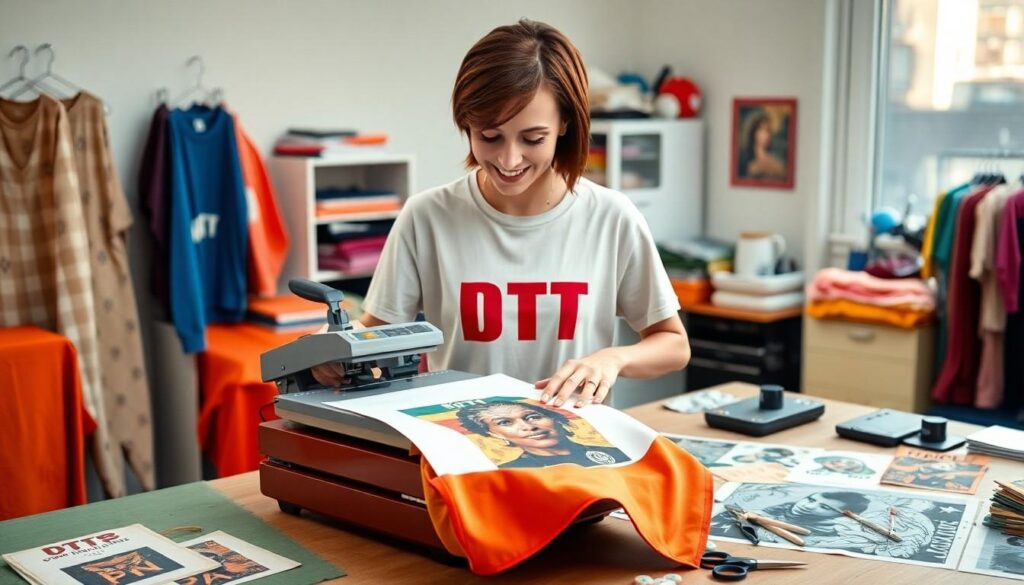
Preheat the heat press to the recommended temperature, usually around 320°F to 340°F. Position the fabric correctly on the heat press for even transfer. Place the transfer film onto the fabric, ensuring proper alignment. Press firmly for the designated time, typically around 15 to 20 seconds, applying consistent pressure. After pressing, allow the transfer to cool slightly before peeling the film away. This step reveals the vibrant design securely adhered to the fabric.
Troubleshooting Common Issues
Creating DTF transfers at home can present challenges. Addressing common issues ensures consistently high-quality results.
Inconsistent Print Quality
Inconsistent print quality often stems from improper printer settings. Use the highest quality settings to achieve vibrant colors. Checking the ink levels can prevent faded prints. A clogged printhead may lead to streaks, so running a cleaning cycle helps. Another consideration involves the type of DTF paper, as low-quality options can affect the outcome. Switching brands or types of transfer paper may resolve these discrepancies. Lastly, ensure that the design files have the correct resolution to maintain sharpness.
Adhesive Problems
Adhesive issues frequently occur when applying the powder. An even layer of adhesive powder is crucial for a successful transfer. Sprinkling too much powder leads to uneven adhesion. Conversely, too little can cause the design to peel. Keeping the adhesive powder at an appropriate distance from the printed design ensures optimal coverage. Heat pressing techniques also matter; inadequate pressure or temperature can prevent proper adhesion of the design to the fabric. Adjusting heat and pressure settings can maximize adhesive strength.
Transfer Durability Concerns
Transfer durability concerns generally arise from improper application techniques. Using a heat press provides better results than an iron due to more consistent heat. Overheating can damage the transfer, while underheating may weaken the bond. Check fabric types, as some materials require special care. Avoid washing newly transferred items in harsh conditions to increase longevity. Following care instructions also maintains vibrant colors and prevents peeling. Regularly inspecting completed transfers helps identify issues ahead of time.
Creating DTF transfers at home opens up a world of creative possibilities. This technique not only allows individuals to design unique apparel but also serves as a fun and rewarding project. With the right materials and tools anyone can produce high-quality prints that enhance their wardrobe or kickstart a small business.
By following the outlined steps and troubleshooting tips anyone can achieve vibrant and durable designs. Embracing this innovative method empowers individuals to express their personal style while enjoying the satisfaction of crafting custom clothing. Whether for personal use or entrepreneurial ventures DTF transfers can transform fabric into a canvas for creativity.