
Every parent knows that babies come with their own set of surprises—some cute and cuddly, others a bit more alarming. When those unexpected moments strike, knowing baby first aid can make all the difference. Whether it’s a minor scrape or a sudden sneeze that sends parents into a tailspin, being prepared is key.
Understanding Baby First Aid
Being ready for emergencies plays a crucial role in ensuring the safety of infants. Knowledge about baby first aid equips parents with essential skills to manage unexpected situations effectively.
Importance of Baby First Aid
Baby first aid knowledge significantly reduces the risk of complications during emergencies. It empowers caregivers to act swiftly in critical moments, which can mean the difference between a minor incident and a serious outcome. Parents and guardians must understand basic techniques, such as CPR and how to handle choking, since infants are particularly vulnerable. Familiarity with first aid principles allows caregivers to maintain calm and provide immediate assistance, fostering peace of mind.
Common Emergencies in Infants
Infants face several common emergencies that require prompt attention. Choking is a leading concern, often occurring with small food items or toys. Allergic reactions can also arise swiftly, emphasizing the importance of recognizing signs such as swelling or difficulty breathing. Burns from hot liquids or surfaces represent another risk, highlighting the need for quick cooling measures. Fever can signify infection, warranting monitoring and potential medical advice. Understanding these emergencies helps caregivers prepare adequately for any situation.
Basic Baby First Aid Techniques
Being prepared with fundamental first aid techniques is essential for caregivers of infants. These skills ensure effective responses to emergencies and help safeguard the well-being of babies.
CPR for Infants
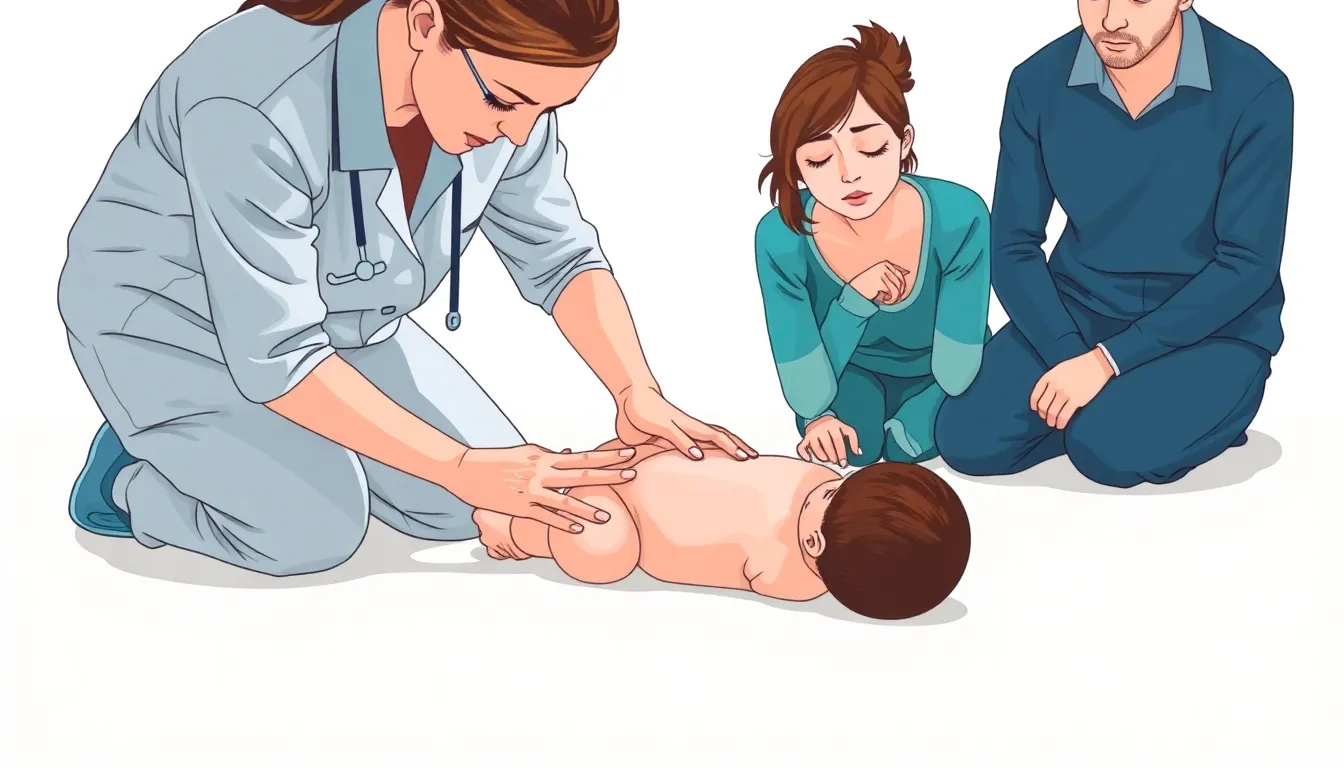
Cardiopulmonary resuscitation (CPR) for infants is a critical skill. It involves a specific set of steps tailored to their unique physiology. First, check for responsiveness by gently tapping the baby and calling their name. If unresponsive, call emergency services immediately. Place the infant on a firm, flat surface. Use two fingers to perform chest compressions at a rate of 100 to 120 compressions per minute; compress the chest about 1.5 inches deep. After 30 compressions, give two rescue breaths by sealing the baby’s mouth and nose, tilting the head slightly back. Continue this cycle until help arrives or the baby shows signs of life.
Choking Relief for Babies
Choking incidents can occur unexpectedly, requiring quick action. First, determine if the baby can cough or cry; if not, proceed with back blows. Position the infant face down on your forearm, supporting the head. Use the heel of your hand to deliver five firm back blows between the shoulder blades. If this doesn’t dislodge the object, turn the baby face up and administer chest thrusts. Use two fingers in the center of the chest, performing five thrusts. Repeat the sequence until the object is expelled or the baby becomes unresponsive. In case of unresponsiveness, initiate CPR and call for emergency services right away.
First Aid Kit Essentials for Babies
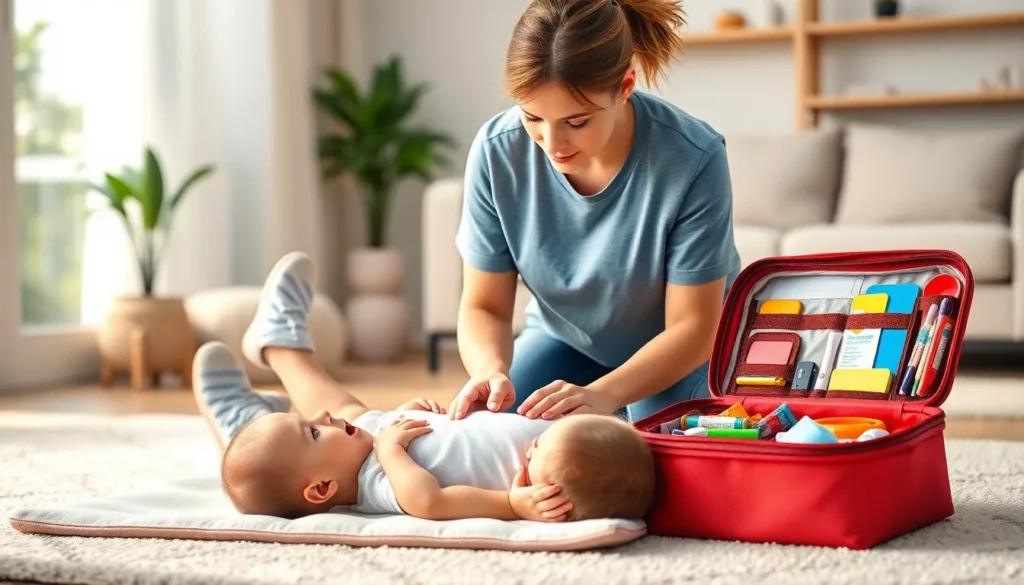
A well-stocked first aid kit ensures prompt responses to emergencies involving babies. Essential items should cater to the unique needs of infants and provide caregivers with necessary tools.
Must-Have Items
Include pediatric-specific items in the kit. Stock a digital thermometer for accurate temperature readings. Add adhesive bandages in various sizes suitable for tiny wounds. Incorporate antiseptic wipes and ointment for cleaning cuts or scrapes. Include a nasal aspirator for clearing nasal congestion. Avoid forgetting infant pain relievers like acetaminophen or ibuprofen. Include a set of tweezers for removing splinters and a pair of scissors for cutting strips of gauze. Ensure, also, that the kit contains emergency contact numbers for quick access.
How to Organize Your Kit
Organizing the first aid kit facilitates quick access during emergencies. Use labeled compartments to separate items like medications, wound care, and tools. Place frequently used items at the top for easy retrieval. Consider using a waterproof container to protect supplies from moisture. Keep a copy of the baby’s medical history inside the kit to ensure important information is available. Regularly check and replenish supplies, especially medications approaching expiration dates. Store the first aid kit in a location that caregivers can easily access but away from the baby’s reach.
When to Seek Professional Help
Recognizing when to seek professional help during a baby emergency is crucial for ensuring the child’s safety. Certain signs indicate the need for immediate medical attention.
Signs of Serious Injury
Severe symptoms often signify a serious injury in infants. Unresponsiveness or extreme lethargy requires prompt evaluation. Difficulty breathing, persistent high fever over 100.4°F, or seizures should trigger an urgent call to a healthcare provider. Presence of excessive bleeding or open fractures indicates a need for immediate medical care. Additionally, signs of dehydration such as dry mouth, lack of urine, or sunken eyes represent situations where professional help becomes necessary. Acting quickly in these instances can prevent further complications.
Emergency Numbers to Know
Parents should keep a list of essential emergency numbers accessible. Local emergency services can be reached by dialing 911. The Poison Control Center, contactable at 1-800-222-1222, is vital for incidents involving harmful substances. Pediatrician’s office numbers should always be at hand for urgent health inquiries. Having the nearest hospital’s contact information also proves beneficial during emergencies. Emergency contacts can facilitate rapid response, ensuring that urgent care is available when needed.
Being prepared for emergencies involving infants is vital for every caregiver. Knowledge of baby first aid not only empowers parents but also ensures that they can respond effectively in critical situations. By mastering essential techniques like CPR and choking relief, caregivers can act swiftly when seconds count.
Having a well-stocked first aid kit tailored to an infant’s needs further enhances readiness. Regularly checking supplies and knowing when to seek professional help can make all the difference in ensuring a baby’s safety. With the right preparation and knowledge, parents can navigate these challenging moments with confidence and care.