
Bath time with a baby can feel like a scene from a slapstick comedy—water splashing everywhere, tiny feet kicking, and maybe even a few rubber ducks joining the party. But fear not! With the right tips, you can transform this chaotic ritual into a delightful bonding experience. After all, who doesn’t want their little one to emerge from the tub looking like a cherubic angel?
Essential Baby Bath Tips
Bath time can foster a joyful connection between parent and child. With the right approach, it transforms into a delightful routine.
Preparing for Bath Time
Gather all necessary supplies before starting the bath. Items like a soft washcloth, baby shampoo, and a gentle soap are essential. Ensure the water temperature stays warm, ideally between 90°F and 100°F. Use a thermometer to check for accuracy. Dress the baby in a comfortable outfit that’s easy to remove. Consider having a towel nearby to wrap the baby immediately after the bath. Lastly, a non-slip mat can provide stability while washing.
Safety Considerations
Always supervise the baby during bath time, as even a few inches of water can pose a risk. Keep the bath area well-organized to avoid hazards. Be cautious with slippery surfaces, ensuring both the baby and caregiver can maintain a secure grip. Adjust the water level to just a few inches, making it safer. Never leave the baby unattended for any reason, even for a moment. When bathing, use only baby-safe products free from harsh chemicals or allergens.
Bathing Techniques
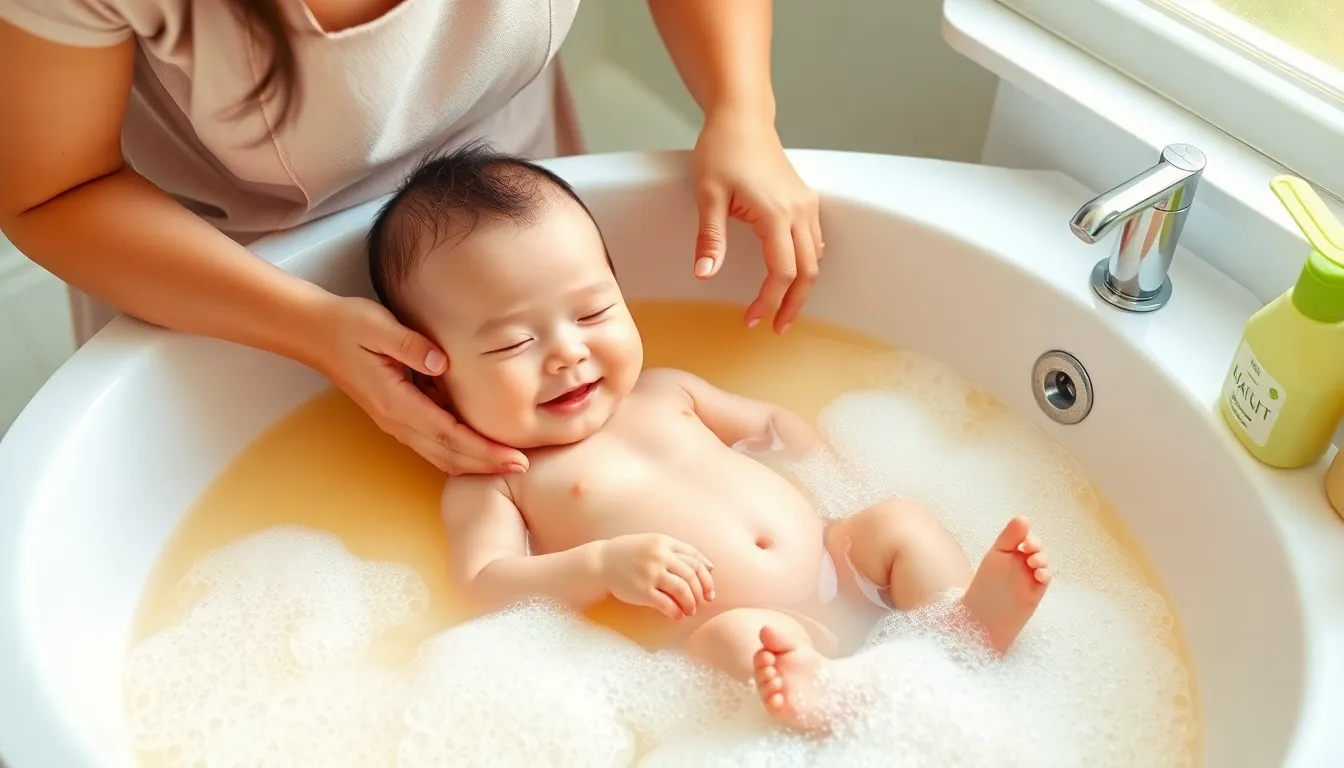
Bathing a baby involves specific techniques to ensure safety and comfort. Key aspects include water temperature and product selection.
The Right Water Temperature
Maintaining the right water temperature is crucial for baby comfort. Water should sit between 90°F and 100°F (32°C to 38°C). Checking with a thermometer is advisable for accuracy. Parents can also use their wrist to feel the temperature, ensuring it feels warm but not hot. Too hot water can irritate a baby’s sensitive skin, leading to discomfort or burns. Testing the water before placing the baby in the tub enhances safety and promotes a pleasant bathing experience.
Choosing the Best Bathing Products
Selecting appropriate bathing products contributes to a positive experience. Use gentle, baby-specific soaps and shampoos that are free from harsh chemicals and fragrances. Look for products containing natural ingredients to reduce the risk of skin irritation. Opt for a soft washcloth to clean the baby without causing discomfort. Keeping the bathing area stocked with baby-friendly items ensures convenience and helps create a calm environment. Avoid adult products, as they can be too harsh for delicate skin.
Bath Time Routine
Establishing a bath time routine fosters a calming atmosphere for both baby and parent. Consistency in timing creates security and familiarity during this experience.
Timing and Frequency
Bathing a baby can happen anywhere from two to seven times a week, depending on skin type and activity. It’s best to choose a time when the baby is alert and happy. For some, evening bath time can signal the start of a bedtime routine. Parents should avoid baths immediately after feedings to minimize discomfort. Consider observing the baby’s mood to identify the best routine for both parties.
Creating a Soothing Environment
Setting the right atmosphere enhances relaxation for bath time. Adjust the room temperature to a comfortable level, ideally between 70°F and 75°F (21°C to 24°C). Dim lights and play soft music to create a peaceful ambiance. Keeping essential items like towels, washcloths, and baby shampoo within reach simplifies the process. Using warm, inviting water encourages the baby to feel secure and nurtured. Maintaining a clutter-free space also helps to avoid potential hazards during bath time.
Post-Bath Care
Post-bath care is crucial for maintaining a baby’s comfort and well-being. A gentle routine helps keep the skin hydrated and the baby feeling cozy.
Drying and Moisturizing
After the bath, thoroughly drying the baby is essential. Use a soft towel, patting gently to avoid irritation. Focus on creases and folds where moisture can linger, as trapped water can lead to rashes. Applying a baby-friendly moisturizer right after drying helps lock in hydration. Look for products without harsh chemicals or fragrances, ensuring they are safe for sensitive skin. Moisturizers containing natural ingredients like shea butter or coconut oil provide effective hydration. Keeping baby skin healthy reduces the risk of dryness and discomfort.
Dressing for Comfort
Choosing comfortable clothing completes the post-bath routine. Select garments made from soft, breathable fabrics like cotton to prevent irritation. One-piece outfits facilitate easy dressing while keeping the baby warm. Ensure that clothing fits without being too tight around the neck and limbs. Avoid any embellishments that could scratch or irritate delicate skin. Soft footed pajamas or bodysuits offer warmth and comfort while allowing easy diaper changes. Dressing the baby promptly after moisturizing retains warmth while promoting a soothing transition to post-bath time.
Bath time can be a delightful experience that strengthens the bond between parent and baby. By following the tips outlined in this article parents can create a safe and enjoyable environment that makes each bath a cherished moment.
From ensuring the right water temperature to using gentle products every step contributes to a positive experience. Establishing a calming routine and focusing on post-bath care further enhances the baby’s comfort.
With a little preparation and a playful attitude bath time can transform into a joyful ritual that both parents and babies look forward to.